Source Wheel Speed Sensor Ring for Excavators, Cars, and Trucks
Compare 30 wheel speed sensor ring options from verified suppliers in China. Buyers can evaluate specifications like ABS ring models, material types, and customization services for excavators, automobiles, and general brake systems.
Key considerations
Products List






Comprehensive Sourcing Guide
Strategic Sourcing Guide for Wheel Speed Sensor Rings
Understanding Component Specifications and Technical Variability
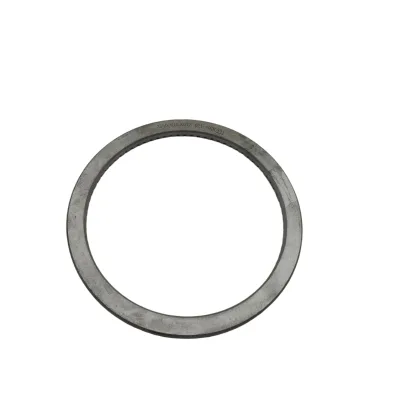
The wheel speed sensor ring, often technically referred to as an ABS ring or tone ring, is a critical component within the braking and stability control systems of modern vehicles. Based on the available market data, this component is fundamentally categorized under the Brake System and Automobile Sensor classifications. The primary function of the ring is to generate the magnetic or electrical signals required by the Electronic Control Unit (ECU) to monitor wheel rotation speed, thereby preventing lock-up during braking and maintaining vehicle stability.
When evaluating technical specifications, buyers must recognize that the product is not a monolithic item but a highly variable component defined by specific model numbers and physical tolerances. The supplied data indicates that model numbers vary significantly, ranging from generic identifiers like "ABS RING" and "JNKP" to specific OEM-style codes such as "C00333990," "8R0615121," and "00001-28888." This variance necessitates a rigorous verification process where the buyer must match the replacement part to the original equipment manufacturer (OEM) number of the specific vehicle being serviced.
Tolerance is a paramount specification for these rings. The observed market data highlights a tolerance range of +/-0.05 to +/-0.01mm. This precision is not merely a suggestion but a functional requirement; deviations beyond this range can lead to signal noise, erratic ABS activation, or complete system failure. The material composition is equally critical, with observed listings indicating the use of Steel and Rubber. The steel component typically forms the structural ring with machined teeth, while rubber may be utilized in specific mounting or damping applications depending on the design. Furthermore, the fitting position is a decisive factor, with products available for the Front & Rear axle, specifically for Left and Right sides. A procurement strategy must account for the fact that front and rear rings often differ in tooth count, diameter, and mounting geometry.
Compliance Standards and Certification Verification
Navigating the compliance landscape for automotive components requires a meticulous approach to certification verification. The supply chain for wheel speed sensor rings is global, with origins primarily noted in China, specifically in regions like Hebei and Shandong. This geographic concentration does not inherently imply a quality deficit, but it does require buyers to validate the certifications claimed by suppliers.
The observed data presents a diverse array of certification claims, including ISO/TSI, ISO/TSIS, ISO/TSIATF-AMECA, CE, and ISO9001. It is essential to treat these as observations of specific listings rather than universal guarantees for all products in the category. For instance, one listing may claim ISO/TSIS alongside a main market of North America and Western Europe, while another may list ISO/TSIATF-AMECA with a broader global market reach. Buyers must verify that the specific certification held by the supplier corresponds to the specific product batch they are purchasing. The presence of an "ATF" (Automotive Task Force) designation is particularly significant, as it suggests adherence to automotive-specific quality management systems rather than general industrial standards.
Additionally, the standard classification for these products varies. Some listings reference "O RING" or "WIRE, METAL" as standards, while others cite specific dimensional standards like "L1029W1369H280" or "35X25X10cm." These references likely pertain to packaging standards or specific product dimensions rather than the engineering standard of the ring itself. Buyers should request the specific engineering drawing or standard number (e.g., a specific ISO or DIN standard for the tooth profile) from the supplier to ensure the component meets the vehicle manufacturer's engineering requirements. The "Condition: New" attribute is consistently observed, but buyers must confirm that "New" implies genuine new manufacturing and not refurbished or remanufactured units, especially when sourcing for critical safety systems.
Cost Drivers and Pricing Dynamics
The pricing structure for wheel speed sensor rings is influenced by a complex interplay of factors, including material costs, manufacturing precision, and supply chain logistics. The observed price range in the market is substantial, spanning from $0.10 to $1,000 USD. This wide disparity indicates that the product is not a single commodity but exists in various tiers based on quality, brand, and application complexity.
The lower end of the price spectrum likely corresponds to generic aftermarket parts with standard tolerances and basic packaging, such as simple plastic bags. In contrast, the higher price points may reflect OEM-equivalent parts, those with tighter tolerances (approaching the +/-0.01mm limit), or products from established brands like "Jnkp" or "Yuejin" that carry a premium for verified quality and warranty support. The "High-Quality" and "100% Tested" attributes observed in the data suggest that higher-priced items often undergo more rigorous quality control processes, which directly impacts the cost.
Minimum Order Quantity (MOQ) is another significant cost driver. The data shows an MOQ range from 1 to 1,000 pieces, with specific listings citing 50 or 100 pieces as the threshold. For small repair shops or individual buyers, an MOQ of 100 pieces may necessitate bulk purchasing, increasing the total capital outlay even if the unit price is lower. Conversely, suppliers offering an MOQ of 1 allow for single-item procurement, which is essential for emergency repairs but often comes with a higher per-unit cost. Buyers must calculate the total cost of ownership, factoring in the MOQ requirement, shipping costs, and potential inventory holding costs, rather than focusing solely on the unit price.
Typical Applications and Market Segmentation
Wheel speed sensor rings are integral to a wide array of vehicle types and applications. The observed data explicitly mentions "Excavator" as a specific application, indicating that these components are not limited to passenger cars but are also critical in heavy machinery and construction equipment. This diversification suggests that the supply chain serves both the automotive aftermarket and the industrial equipment sectors.
The market segmentation is equally broad. Listings indicate a global reach, with main markets covering North America, Western Europe, South America, Eastern Europe, Southeast Asia, Africa, and Oceania. This global distribution implies that the components must meet varying regulatory requirements and environmental conditions. For example, parts destined for Northern Europe may require different corrosion resistance properties compared to those for Southeast Asia. The "Customization: Available" and "Customized Service: Yes" attributes highlight that the market is responsive to specific vehicle requirements. Buyers should verify if the supplier can accommodate custom modifications, such as specific tooth counts or mounting hole patterns, which are often necessary for older or specialized vehicle models.
The purpose of these parts is consistently listed as "for replace/repair," confirming their role in the maintenance and restoration of braking systems. Whether for a standard passenger vehicle or a heavy-duty excavator, the failure of a wheel speed sensor ring can lead to significant safety risks, making the reliability of the source a top priority.
Supplier Evaluation and Selection Criteria
Selecting a reliable supplier for wheel speed sensor rings requires a multi-faceted evaluation strategy. The first step is to verify the supplier's location and origin. The data points to China as the primary origin, with specific mentions of Hebei and Shandong provinces. While these regions are hubs for automotive manufacturing, buyers should request detailed information about the specific factory location and its production capacity.
Brand reputation is another critical factor. The data lists brands such as "Jnkp" and "Yuejin." While these names appear in the listings, buyers should conduct independent due diligence to understand the brand's standing in the global market. A brand with a strong presence in North America and Western Europe may indicate higher adherence to international quality standards. Additionally, the "User Evaluation: Good" attribute suggests that customer satisfaction is a key metric, but buyers should seek out independent reviews or case studies rather than relying solely on supplier-provided testimonials.
The ability to provide customization is a differentiator. Suppliers offering "Customized Service" and "Customization: Available" are better positioned to handle unique procurement needs. Buyers should assess the supplier's flexibility in terms of packaging, labeling, and technical specifications. The "Product Name: Brake Pad Wear Sensor" listed in the data suggests that some suppliers may offer related components, indicating a broader product portfolio that could streamline the procurement process.
Quality Control and Testing Protocols
Quality assurance is non-negotiable when sourcing components for safety-critical systems like the ABS. The observed data emphasizes "100% Tested" and "High-Quality" as key attributes. However, buyers must define what these terms mean in the context of their specific procurement. A "100% Tested" claim should be backed by a description of the testing methodology. Does this include dimensional inspection, magnetic field testing, or durability cycling?
The tolerance range of +/-0.05 to +/-0.01mm is a specific quality metric that must be verified. Buyers should request a Certificate of Conformance (CoC) or a test report that explicitly states the measured tolerances for the batch being purchased. The "Standard: O RING" or "WIRE, METAL" references in the data are ambiguous regarding the actual engineering standard of the ring teeth. Buyers should insist on a detailed technical drawing or specification sheet that defines the tooth profile, pitch, and material hardness.
Packaging also plays a role in quality control. The data lists various packaging options, including "Plastic Bag/Box/Carton/Pallet," "Box," and "Plastic Bag+Nuetral White Box+Carton+Crates or PAL." Proper packaging is essential to prevent damage during transit, which could compromise the precision of the ring. For high-value or precision-critical orders, specifying protective packaging like wooden cases or custom crates is advisable.
Long-Term Procurement and Supply Chain Stability
Sourcing wheel speed sensor rings is not a one-time transaction but a long-term relationship that impacts operational continuity. The "Delivery Time" of 7-15 days observed in the data provides a baseline for lead time expectations, but buyers should negotiate specific terms based on their inventory needs. For critical spare parts, a shorter lead time may be essential to minimize vehicle downtime.
The "Main Market" diversity suggests that suppliers are experienced in handling international logistics. However, buyers should be aware of potential supply chain disruptions, especially given the reliance on specific manufacturing regions. Establishing a relationship with a supplier who offers "Customized Service" can provide a buffer against supply shortages, as they may be able to prioritize orders or offer alternative solutions.
Finally, the "Selling Units: Single item" attribute indicates flexibility in purchasing, which is beneficial for small-scale operations. However, for large fleets or distribution networks, negotiating volume discounts and establishing a long-term contract with a reliable supplier is crucial. The goal is to secure a consistent supply of high-quality components that meet the strict tolerances and safety standards required by the automotive and industrial sectors. By focusing on technical verification, certification validation, and supplier reliability, buyers can mitigate risks and ensure the safety and performance of the vehicles they support.
FAQs
What certifications do wheel speed sensor rings typically have?
Many listings show certifications like ISO/TSIS, CE, ISO9001, and IATF-16949. Buyers must verify that the specific batch holds the claimed certification, as these vary by supplier and product listing rather than being universal for all items.
How precise are the tolerances for these sensor rings?
Observed tolerances range from plus or minus 0.05 to plus or minus 0.01mm. This precision is critical for signal accuracy, and buyers should request test reports confirming the batch meets these specific dimensional limits.
Which materials are used in manufacturing these rings?
Products are commonly made from steel for the structural ring and rubber for mounting or damping. The specific material composition depends on the design, and buyers should confirm the material type matches their vehicle's requirements.
Can buyers find customized wheel speed sensor rings?
Yes, customization is available with services offered for specific needs. Buyers should verify if the supplier can accommodate custom modifications like unique tooth counts or mounting patterns required for older or specialized vehicle models.
What is the typical minimum order quantity for these parts?
MOQs range from 1 to 1000 pieces, with specific listings showing 50 or 100 pieces. Small repair shops may need to find suppliers offering lower MOQs to avoid excessive inventory costs for single-item repairs.
Where are these sensor rings primarily manufactured?
Most products originate from China, specifically regions like Hebei and Shandong. Buyers should request detailed factory locations to assess production capacity and logistics capabilities for their specific procurement needs.
How long is the delivery time for these components?
Delivery times typically range from 7 to 15 days. This lead time is subject to supplier capacity and order volume, so buyers should confirm the specific schedule before finalizing procurement plans.